

Why Maintenance Myths Are So Persistent
Car care advice travels far and outlives its accuracy. Rules that made sense for vehicles built in the 1970s and 1980s get passed down as universal truths, even as engine technology, oil chemistry, and manufacturing tolerances have changed dramatically. The result: many drivers are either over-maintaining their cars based on outdated guidance, or under-maintaining them because they assume everything is fine without a visible symptom.
Neither approach serves your vehicle well. The evidence-based standard for maintenance is your manufacturer's documented schedule - not a quick-lube sticker, not a neighbor's advice, and not a one-size-fits-all rule. How to read your owner's manual maintenance schedule is a practical starting point if you've never consulted that section before.
Myth
You need to change your oil every 3,000 miles, no matter what.
Fact
Most modern vehicles with synthetic oil can go 5,000 to 10,000 miles or more between changes, depending on the manufacturer's recommendation.
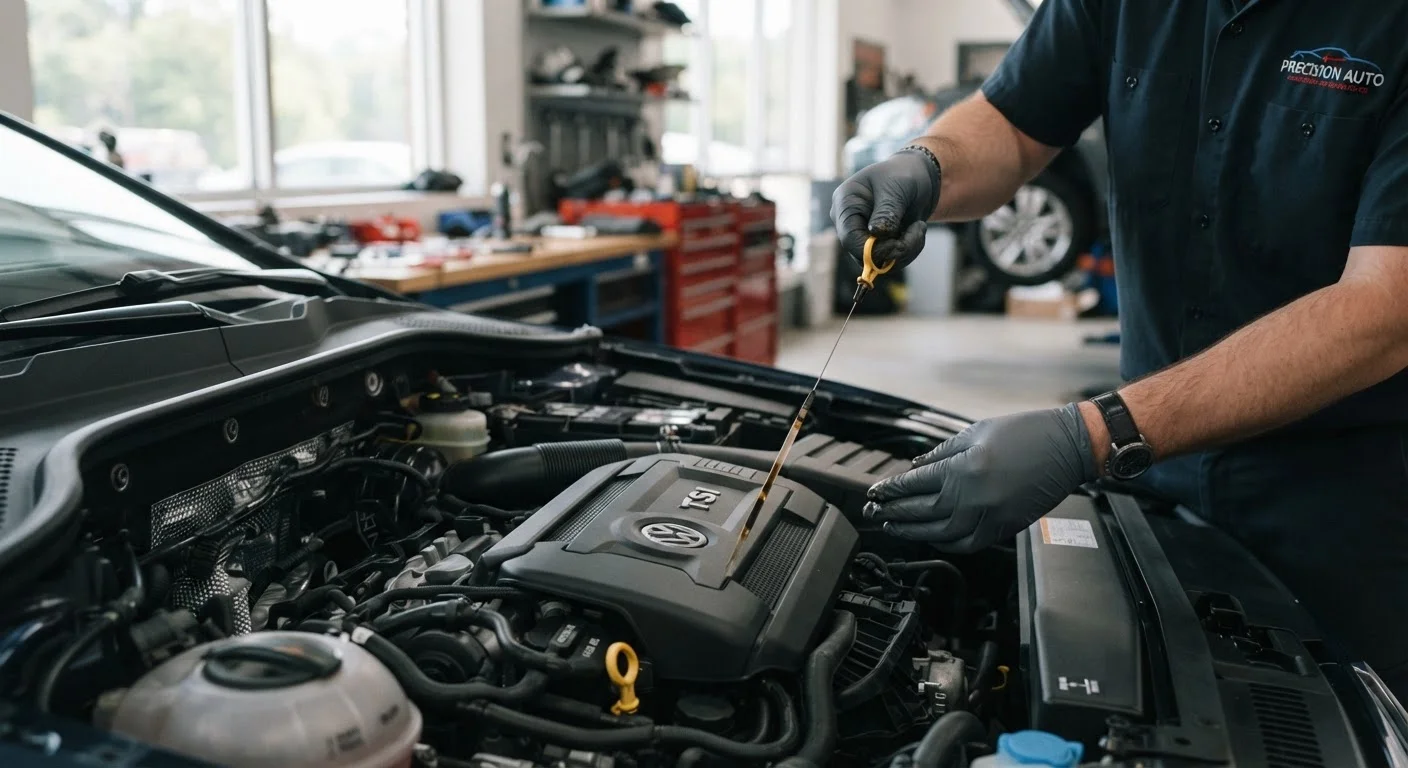
The 3,000-mile interval was a reasonable guideline decades ago, when conventional motor oil and older engine technology made more frequent changes necessary. Today's engines are built to tighter tolerances, and synthetic oils are engineered to maintain lubrication properties far longer. Automakers now set intervals based on real engineering data, not marketing convention.
The right interval for your car is in your owner's manual - not on a sticker from a quick-lube shop. Changing oil more frequently than necessary wastes money and resources without adding meaningful protection. See how synthetic and conventional oils compare for more detail on what actually changes between formulas.
Myth
The pressure number on the tire sidewall is where you should inflate your tires.
Fact
The sidewall number is the maximum pressure the tire can hold - not the recommended operating pressure for your vehicle.
Inflating to the sidewall maximum can make tires overinflated for your specific vehicle's weight and suspension, reducing ride quality and increasing the risk of uneven wear or blowout on rough surfaces. The correct target is the pressure listed on the sticker inside your driver's door jamb - or in the owner's manual. That number is set by the automaker to match your vehicle's load and handling characteristics.
Tire pressure also changes with temperature: roughly 1 PSI drops for every 10°F decrease in ambient temperature. Checking pressure monthly, or before long trips, is a habit worth building. A plain-English primer on tire pressure and tread depth covers the full picture.
Myth
Premium fuel makes any car run better and last longer.
Fact
Premium fuel only benefits engines specifically designed and calibrated to require it - using it in a standard engine provides no measurable advantage.
Premium fuel has a higher octane rating, which resists pre-ignition (knocking) in high-compression engines. If your engine is not designed for it, the extra octane has nothing meaningful to do. You're not adding protection - you're spending more at the pump for no engineering benefit.
Check your owner's manual: if it says "premium recommended," regular fuel is still acceptable in most cases, though performance may vary slightly. If it says "premium required," use it. If it says nothing beyond regular, premium is genuinely unnecessary for your vehicle.
Myth
If the car seems to be running fine, maintenance can wait.
Fact
Many developing mechanical problems produce no noticeable symptoms until significant damage has already occurred.
This is one of the most costly assumptions in car ownership. Coolant degradation, brake fluid contamination, and transmission fluid breakdown don't announce themselves with obvious symptoms early on. By the time a driver notices something wrong, the underlying issue may have escalated substantially.
Scheduled maintenance exists to catch and prevent problems before they become failures. What actually happens inside an engine when oil changes are skipped illustrates this well. Staying on schedule is almost always less expensive than reactive repair.
Myth
Tire rotation is optional if the tires aren't showing obvious wear.
Fact
Tires wear unevenly based on their position on the vehicle, and rotation is necessary to equalize that wear before it becomes visible.
Front tires on front-wheel-drive vehicles handle both steering and power delivery, which accelerates wear on their outer edges. Without rotation, this wear pattern deepens silently until it shortens the tire's usable life significantly. Most manufacturers recommend rotation every 5,000 to 7,500 miles - often aligned with oil change intervals for convenience.
Skipping rotation doesn't just cost you tires sooner; it can also affect handling and braking performance. For a full breakdown of when each routine maintenance task is actually due, consult a reliable maintenance schedule reference.
What the Evidence Actually Shows
Correcting these myths isn't just about saving money - though that's a real benefit. It's about making decisions grounded in how your specific vehicle actually works, rather than inherited assumptions. Whether it's fuel grade, tire pressure, or oil intervals, the details matter and they vary by make and model.
Your Owner's Manual Overrides Generic Advice
Manufacturer maintenance schedules are vehicle-specific and based on extensive engineering data. Generic rules of thumb - no matter how widely repeated - cannot account for your engine design, oil capacity, or driving conditions. Always cross-reference any maintenance advice against the schedule in your owner's manual.
For drivers who want a dependable, long-running vehicle, the foundation is straightforward: follow the manufacturer schedule, check fluids and tire pressure regularly, and treat warning lights as signals worth investigating promptly. Keeping a car safe, road-legal, and reliable long-term offers a broader view of the habits that support vehicle longevity.
Ignoring Warning Lights Has Real Consequences
A check engine light or oil pressure warning is not a suggestion. Many drivers dismiss these indicators assuming a minor sensor issue, only to face engine damage that could have been prevented. If a warning light appears and persists, have it diagnosed promptly by a qualified mechanic - do not assume it will resolve on its own.
5,000-10,000 mi
Typical synthetic oil change interval
Most modern vehicle manufacturers specify oil change intervals well beyond the old 3,000-mile guideline when using full synthetic oil.
1 PSI
Pressure drop per 10°F temperature fall
The U.S. Department of Energy notes that tire pressure decreases roughly 1 PSI for every 10-degree Fahrenheit drop in outside temperature.
The content on this site is provided for informational purposes only and should not be considered a substitute for professional advice. While we strive to provide accurate and up-to-date information, we make no guarantees regarding its completeness or accuracy. Always consult a qualified professional for advice specific to your circumstances before making any decisions.