

Why Return Policies Deserve a Read Before You Buy
Most shoppers skim - or skip - return policies until they need to use one. At that point, the fine print stops being abstract. A 14-day window you didn't notice, a restocking fee you didn't expect, or a final-sale marking you overlooked can turn a straightforward return into a real loss.
Return policies are contractual terms set by the retailer. You agree to them at the moment of purchase, whether or not you've read them. That asymmetry is exactly why building a habit of checking before you buy matters. See our pre-purchase checklist for a broader framework to apply before any significant transaction.
The Core Components of Any Return Policy
A return policy can be broken into several distinct clauses. Understanding each one tells you exactly what you're agreeing to.
17.6%
Average U.S. retail return rate
The National Retail Federation has reported that returns account for a significant share of total retail sales, driving retailers to tighten their policies.
10-25%
Typical restocking fee range
Restocking fees on electronics and appliances commonly fall in this range, according to widely observed retail practice across major retail categories.
Return Window
This is the number of days you have to initiate a return after purchase. Windows vary considerably - some retailers offer 14 days, others 30, 60, or even 365. Critically, the window usually starts at the date of purchase or shipment, not the date you receive the item. For online orders, this distinction can cut meaningfully into your available time.
Item Condition Requirements
Most policies require items to be in original, unused condition with all original packaging and tags attached. Electronics, clothing, and appliances are frequent sticking points - a removed tag or opened box can trigger a fee or an outright denial.
Proof of Purchase
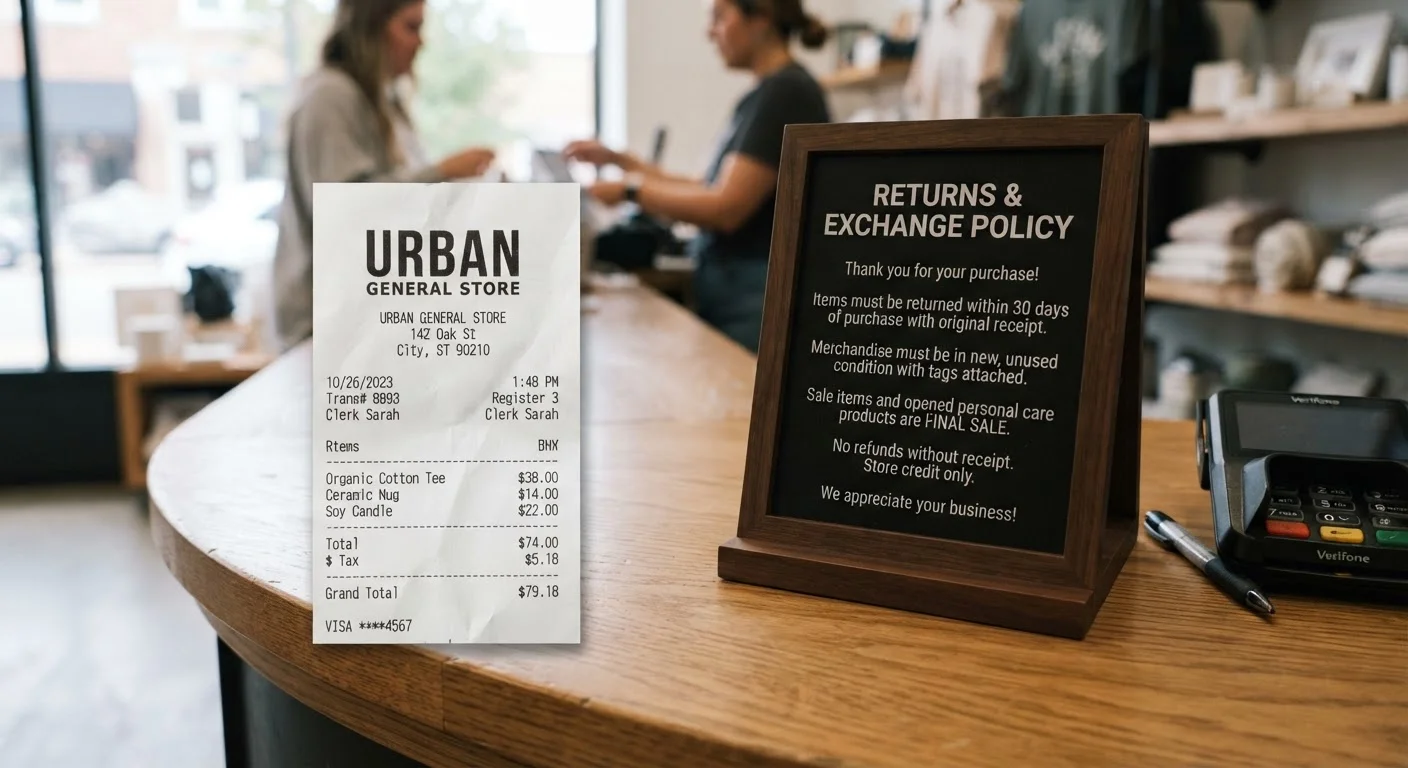
A receipt, order confirmation email, or packing slip is typically required. Without one, the retailer may limit your options to an exchange or store credit at the item's current sale price - which may be lower than what you paid.
Restocking Fees
A restocking fee is a deduction from your refund, expressed as a percentage of the purchase price. These fees are most common on electronics, large appliances, and specialty items. A 15% restocking fee on a $500 item means you'd net $425 - a meaningful gap between what you paid and what you get back.
Final-Sale and Non-Returnable Items
Final-sale items cannot be returned, exchanged, or credited under any circumstances. Clearance merchandise, personalized products, intimate apparel, and digital downloads are commonly designated this way. Outlet merchandise often carries similar restrictions - worth noting if you shop those channels, as explained in our overview of what outlet stores are actually offering.
Online vs. In-Store: When the Rules Differ
Even within a single retailer, return rules for online and in-store purchases can differ substantially. Online orders may have a shorter return window, require you to pay return shipping, or route you to a separate returns portal. In-store purchases may be ineligible for mail-in returns. Cross-channel returns - returning an online order to a physical location - are sometimes permitted but should never be assumed.
Screenshot the Policy Before You Buy
Return policies can change, and the version that applies to your purchase is the one in effect at the time of sale. Taking a screenshot or saving a PDF of the policy before you complete checkout gives you documentation if a dispute arises later. This is especially useful for high-value items or purchases from less-familiar retailers.
Always check the specific policy channel that applies to your purchase method. The policy linked on the homepage may not be the one governing your order.
What Return Policies Don't Cover - and What Does
Return policies are distinct from warranty rights and consumer protection law. A retailer's return policy may lapse in 30 days, but a manufacturer's warranty might cover defects for a year or more. Separately, if an item is materially misrepresented - described as new but sold used, for example - consumer protection statutes may give you recourse beyond what the return policy allows.
Credit card chargeback rights add another layer. If a return is wrongly denied or a product was never delivered, your card issuer may intervene. These protections don't replace the return policy, but they're worth understanding as a backup. For a fuller picture, see what consumer protections cover when a purchase goes wrong.
For a focused breakdown of what to look for specifically in a return policy before completing any purchase, the reading a return policy before you regret it guide covers the key clauses in detail.
This article is for general informational purposes only and does not constitute legal or financial advice. Consumer protection laws vary by state; consult a qualified professional for guidance specific to your situation.
Frequently Asked Questions
No federal law requires retailers to accept returns on non-defective merchandise. Some states require posted disclosure of a no-return policy, but the policy itself is at the retailer's discretion. If an item is defective or not as described, separate consumer protection laws may apply.
A restocking fee is a percentage of the purchase price deducted from your refund when you return an item. It compensates the retailer for repackaging and reselling. These fees are most common on electronics, large appliances, and opened software, and typically range from 10% to 25%.
Final sale means the retailer will not accept a return, exchange, or issue store credit for that item under any circumstance. This designation is common on clearance items, intimate apparel, personalized goods, and seasonal merchandise. Always treat a final-sale purchase as permanent.
Sometimes, but not always. Many retailers allow cross-channel returns, but some maintain separate policies for online versus in-store purchases. Check the retailer's policy for both channels before buying - the online policy may have different windows or conditions.
Without a receipt, retailers may deny the return, offer an exchange only, or issue a store credit for the item's current (not purchase) price. Some retailers can look up purchases using a credit card or loyalty account number, which can serve as a receipt substitute.
Yes, indirectly. If a return is denied and you believe the item was misrepresented, you may have chargeback rights through your card issuer. Some credit cards also offer extended return protection as a benefit. These are separate from - not a replacement for - the retailer's own policy.
The content on this site is provided for informational purposes only and should not be considered a substitute for professional advice. While we strive to provide accurate and up-to-date information, we make no guarantees regarding its completeness or accuracy. Always consult a qualified professional for advice specific to your circumstances before making any decisions.