

How Device Installment Plans Actually Work
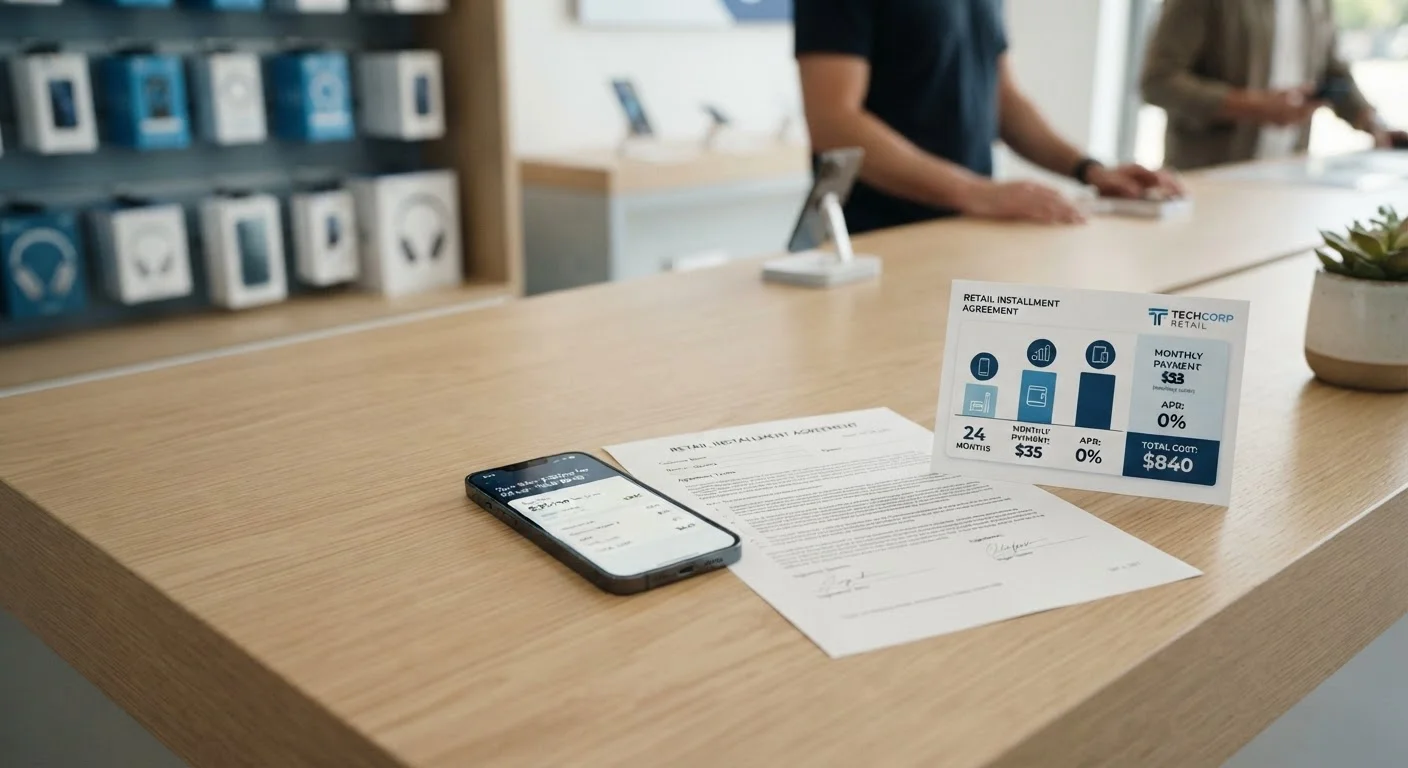
When a carrier offers a phone for a low monthly payment, that figure represents your device cost divided across an installment term - not a reduced price. A phone priced at $1,000 paid over 36 months costs approximately $27.78 per month before taxes and fees. Many carriers advertise 0% APR on these plans, meaning no interest is added, but the full retail price is still owed.
The installment charge appears as a separate line item on your monthly bill, alongside your service plan cost. This distinction matters: your service plan cost and your device cost are billed together but are legally separate agreements. Carriers commonly use a financing subsidiary or a third-party lender to facilitate these installments, which means a credit check may be required.
It's also worth understanding how these plans relate to account flexibility. As explained in our guide to family plan structures, device installments are tied to a specific line on an account, which can complicate transfers or upgrades within a shared plan.
24-36 months
Typical carrier installment plan term
Most major US carriers structure device payment plans across 24 or 36 monthly payments, with some offering shorter terms.
~70%
Smartphones sold via installment plans
Industry estimates suggest a large majority of new smartphone activations in the US involve some form of installment financing rather than outright purchase.
$0 upfront
Common advertised trade-in deal requirement
Many promotions advertise no upfront device cost, but this assumes trade-in eligibility, plan enrollment, and full term completion.
The Mechanics of Trade-In Credits
Trade-in programs appear straightforward - hand over your old device, receive credit toward a new one - but the delivery mechanism matters significantly. In most carrier promotions, trade-in value is not applied as an immediate price reduction. Instead, it is disbursed as monthly bill credits spread across the full installment term. A $600 trade-in credit on a 24-month plan translates to $25 per month off your bill.
This structure creates a meaningful condition: to receive the full trade-in value, you must remain on the same carrier and the same qualifying plan for the entire term. If you switch carriers, upgrade early outside a carrier program, or change to an ineligible plan, the remaining credits typically stop. This is structurally similar to how some subscription services lock in value over time - a dynamic explored in our piece on subscription traps and recurring charges.
Promotional trade-in values are also often tiered. Carriers may offer a higher credit during a launch window for a specific model, then revert to standard rates afterward. The condition of your device is assessed either at the point of trade or after the carrier receives and inspects it - some carriers allow you to mail in a device after activating the new one, with final credit contingent on inspection results.
Get Your Trade-In Estimate Before You Shop
Most carriers and major retailers offer online trade-in estimators that let you check approximate value before setting foot in a store. Running this estimate in advance gives you a baseline to compare against what's offered at point of sale. Keep in mind that online quotes are typically contingent on the device passing a physical inspection, so check the carrier's condition criteria carefully.
What to Evaluate Before You Commit
Before agreeing to a device installment plan paired with a trade-in, consider three core factors: the total cost of ownership over the full term, the plan requirement attached to the promotion, and your likelihood of staying with that carrier.
Promotional credits frequently require enrollment in a premium unlimited tier, which costs more per month than a base plan. The net savings from the trade-in credit must be weighed against the higher monthly service cost over the full term. Running these numbers over 24 or 36 months gives a clearer picture than focusing on the advertised monthly device payment alone.
Device condition is another variable. Trade-in values are estimates until inspection is complete. A phone with a cracked screen or diminished battery health may receive a lower final value than initially quoted, reducing the overall benefit of the deal. Documenting your device's condition before trade-in and understanding the carrier's dispute process is a reasonable precaution.
Finally, consider your upgrade timeline. Some carriers offer upgrade programs that allow you to trade in early - typically after paying off a set percentage of the device - but these often require returning the phone and starting a new installment cycle, not carrying over a balance. Understanding the lifecycle of an installment commitment shares some parallels with understanding vehicle trade-ins and ownership costs, where the timing of a trade and remaining loan balance both affect the financial outcome.
“Consumers often focus on the monthly device payment without calculating what they'll pay in total over the full plan term - including the service plan cost required to access the promotion. The true comparison is the all-in cost over 24 or 36 months.”
— Consumer Financial Protection Bureau, US federal consumer financial watchdog, guidance on mobile phone financing disclosures
Frequently Asked Questions
If you leave a carrier before your device installment plan is paid off, you're typically required to pay the remaining device balance in full. This is separate from any early termination fees for your service plan. Always check your installment agreement for the exact payoff amount and process.
Not exactly. Carrier installment plans are a form of financing offered directly through the carrier, often at 0% APR. Credit card financing may carry interest depending on your card terms. Both spread payments over time, but the cost and terms differ meaningfully.
Carriers and retailers assess trade-in value based on the device model, age, storage capacity, and physical condition. Cracked screens, water damage, or non-functional components typically reduce the offered value. You can often get an estimated value online before committing.
Some carriers allow this, but the remaining balance on your old device must typically be settled before or as part of the trade. The trade-in credit may offset that balance, but you could still owe money if the balance exceeds the trade-in value.
Yes. Promotional trade-in values are time-limited and subject to change without notice. The value offered during a promotional window can be significantly higher than the standard trade-in rate, so terms and eligibility should be verified at the time of transaction.
Yes. Options include buying an unlocked phone outright, using a third-party financing service, or purchasing a refurbished device. Each approach has different upfront cost and flexibility implications. <a href="/tech-telecom/phones-and-plans/prepaid-vs-postpaid-wireless-understanding-the-real-differences">Prepaid plans</a> often pair well with outright device purchases.
The content on this site is provided for informational purposes only and should not be considered a substitute for professional advice. While we strive to provide accurate and up-to-date information, we make no guarantees regarding its completeness or accuracy. Always consult a qualified professional for advice specific to your circumstances before making any decisions.