

Why Lenders Invented the Credit Score
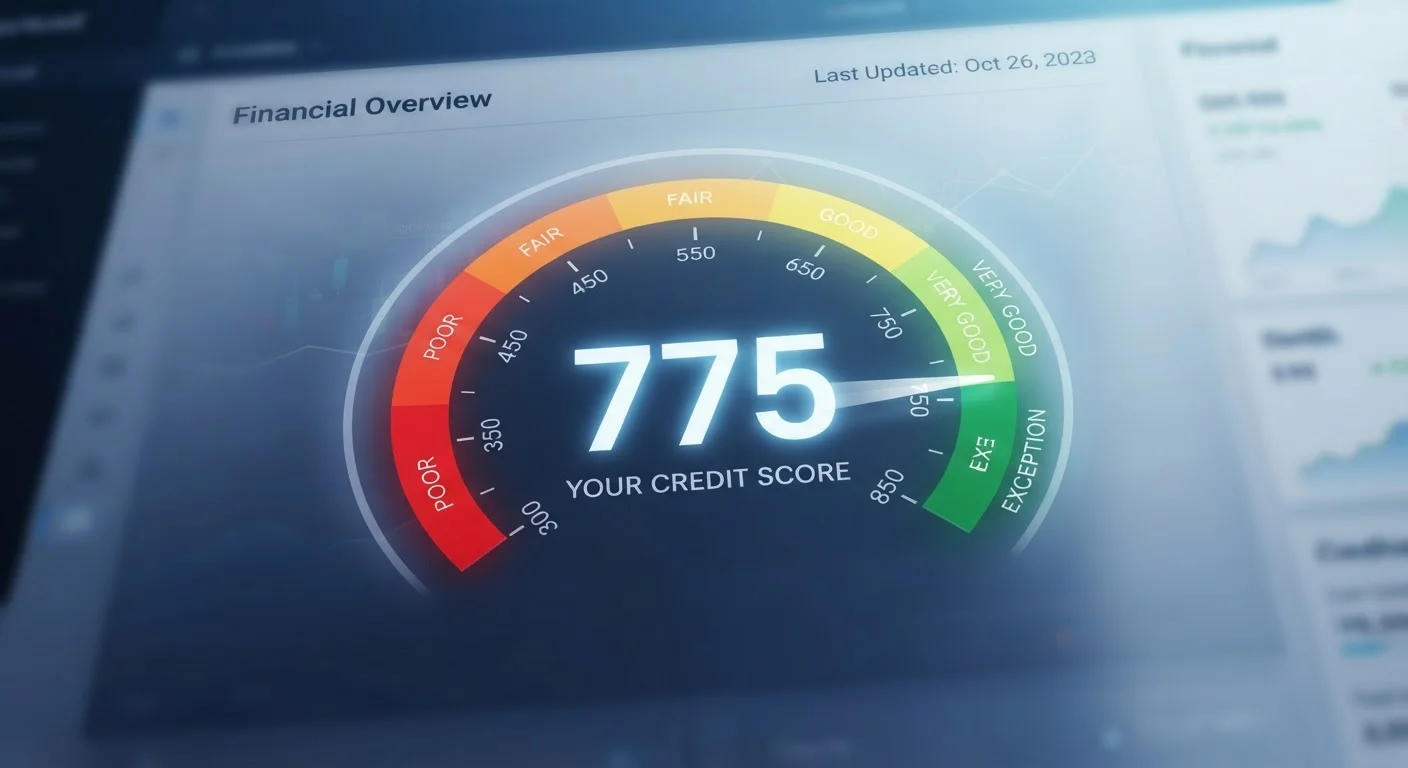
Before standardized credit scoring, lenders evaluated loan applications largely through manual review - a slow, inconsistent, and sometimes biased process. The credit score emerged as a way to make that judgment systematic and comparable across millions of borrowers. It compresses years of financial behavior into a single number that a lender can assess in seconds.
Today, credit scores influence far more than loan approvals. Landlords use them to screen tenants, insurers in many states factor them into premium calculations, and some employers review them during background checks. Understanding what the number actually measures - rather than what people assume it measures - is the first step toward managing it intentionally.
It's also worth noting the distinction between your credit score and your credit report. Your credit report and your credit score are not the same thing: the report is the raw history, while the score is the calculated summary derived from it.
The Five Factors That Build Your Score
The FICO® model - the most widely used framework - breaks a credit score into five weighted categories. Each one reflects a different dimension of your borrowing behavior.
35%
Weight of payment history in FICO Score
According to FICO's publicly disclosed score factor breakdown, on-time payment behavior is the single largest component of a standard FICO Score.
300-850
Standard FICO Score range
FICO Scores span this range across most consumer lending contexts; higher scores indicate lower predicted credit risk to lenders.
30%
Weight of credit utilization in FICO Score
FICO's model allocates roughly 30% of score weight to amounts owed relative to available credit limits, making it the second most influential factor.
1. Payment History (≈35%)
This is the largest single factor. It tracks whether you've paid accounts on time across credit cards, mortgages, auto loans, and other debts. A single missed payment reported to a bureau can cause a meaningful score drop, especially if your file is otherwise clean. The impact of late payments does fade over time, but the record remains on your report for seven years.
2. Credit Utilization (≈30%)
Utilization measures how much of your available revolving credit - primarily credit cards - you're currently using. Carrying a $3,000 balance on a card with a $10,000 limit puts you at 30% utilization. Most scoring guidance suggests keeping this figure below 30%, and lower is generally better. This factor responds quickly: paying down balances can raise your score within one to two billing cycles.
3. Length of Credit History (≈15%)
Older accounts, a longer average account age, and a longer time since you last opened new credit all contribute positively here. This is why closing old credit cards - even ones you rarely use - can sometimes hurt your score by shortening your average account age.
4. Credit Mix (≈10%)
Lenders view borrowers more favorably when they've demonstrated they can manage different types of credit responsibly - revolving accounts like credit cards alongside installment accounts like auto or student loans. You don't need every type, but a mix does add a modest benefit.
5. New Credit (≈10%)
Each time you apply for a new credit account, a hard inquiry is recorded on your report and can temporarily lower your score by a few points. Opening several new accounts in a short window signals higher risk to lenders. Rate shopping for a mortgage or auto loan within a focused window is generally treated as a single inquiry by most scoring models.
What Your Score Doesn't Measure
Equally important is what credit scores deliberately exclude. Your income, savings, investment balances, and net worth play no role in the calculation. A high earner with erratic payment habits can have a lower score than someone earning a modest income who pays every bill on time.
Race, gender, national origin, religion, and marital status are legally prohibited from being used as scoring factors under the Equal Credit Opportunity Act. Age is also excluded from FICO models (though being new to credit with a thin file naturally affects the length-of-history factor).
Maria has a $50,000 salary and $15,000 in savings, but she has missed two credit card payments in the past year and carries balances near her credit limits.
David is a recent college graduate with one credit card opened 18 months ago, a zero balance, and a perfect on-time payment record.
Priya applies for three credit cards in one month after moving to a new city and wanting to rebuild her financial life.
This distinction matters because many consumers try to improve their scores by saving more money - which is a sound financial habit, but it won't move the number. Score improvement requires directly addressing the five factors above. For a broader view of what lenders evaluate beyond the score itself, see what lenders actually look at when you apply for a loan.
This article is for general informational and educational purposes only and does not constitute personalized financial or legal advice. Consult a qualified financial professional for guidance specific to your situation.
Frequently Asked Questions
Most scoring models treat 670-739 as 'good,' 740-799 as 'very good,' and 800 or above as 'exceptional.' Scores below 580 are generally considered poor and may limit borrowing options or result in higher interest rates. These ranges are guidelines, not guarantees of any specific lending outcome.
No. Checking your own score is considered a soft inquiry and has no effect on your score. Only hard inquiries - initiated when you apply for new credit - can cause a small, temporary dip. See our article on <a href="/money-finance/credit-and-investing/hard-inquiries-soft-inquiries-and-your-credit-score">hard vs. soft inquiries</a> for more detail.
Most negative marks - such as late payments or collections - remain on your credit report for seven years. A Chapter 7 bankruptcy can stay for up to ten years. As these items age, their impact on your score typically diminishes.
No. Income is not a factor in any major credit scoring model. Your score is based solely on how you manage credit accounts, not on how much you earn. Lenders may consider income separately when evaluating a full loan application.
Yes. You have scores from each of the three major credit bureaus - Equifax, Experian, and TransUnion - and different scoring models may produce different numbers from the same bureau's data. Lenders choose which model to use, so the score they see may differ from one you access on your own.
The content on this site is provided for informational purposes only and should not be considered a substitute for professional advice. While we strive to provide accurate and up-to-date information, we make no guarantees regarding its completeness or accuracy. Always consult a qualified professional for advice specific to your circumstances before making any decisions.