

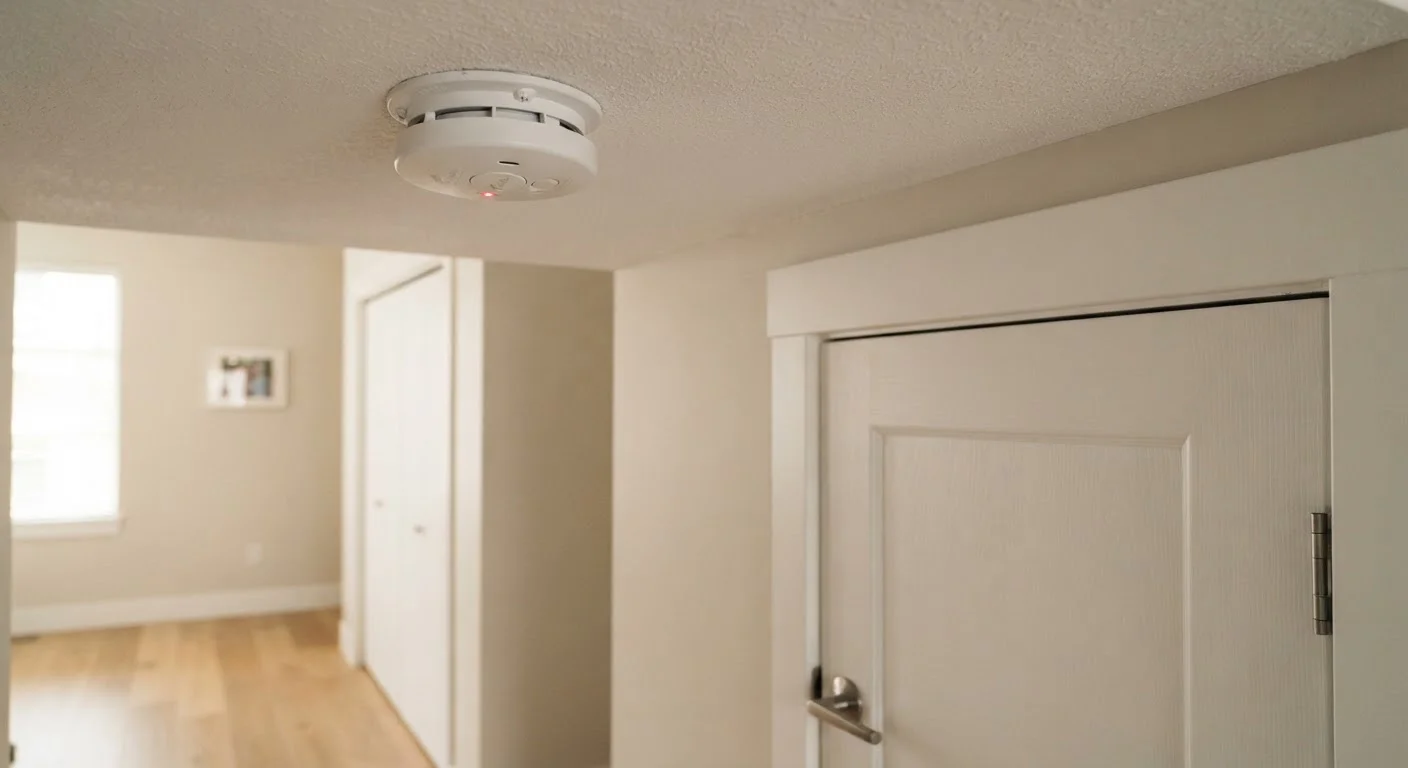
Why Placement Matters More Than You Think
Having smoke and carbon monoxide (CO) detectors in your home is a critical safety measure - but installing them in the wrong location can significantly delay or prevent an alarm from sounding in time. Heat, smoke, and CO gas behave differently depending on the room, ceiling height, and ventilation, which is why placement guidelines are specific rather than general.
Most placement rules come from the National Fire Protection Association (NFPA) standard NFPA 72, the National Fire Alarm and Signaling Code, and from the International Residential Code (IRC). Local requirements may be stricter, so always verify with your local building or fire department before finalizing installations.
Smoke Detector Placement Guidelines
Install smoke detectors on every level of the home, including the basement. Place one inside each bedroom and one outside each sleeping area - typically in the hallway - so that occupants are alerted while they sleep.
Ceiling vs. Wall Mounting
- Ceiling mount: Position the detector at least 4 inches from any wall.
- Wall mount: Place between 4 and 12 inches from the ceiling. Smoke rises and collects near the top of the room, so mounting too low reduces effectiveness.
Locations to Avoid
- Within 3 feet of a cooking appliance - cooking fumes cause nuisance alarms.
- Near windows, doors, or ducts where drafts could interfere with smoke detection.
- In garages, attics, or unfinished areas subject to extreme temperature swings unless detectors are rated for those environments.
- Near ceiling fans or in the peak of an A-frame ceiling without following manufacturer guidance for sloped surfaces.
Carbon Monoxide Detector Placement Guidelines
CO is odorless, colorless, and slightly less dense than air, so it disperses relatively evenly throughout a room at breathing height. Unlike smoke, it does not simply rise to the ceiling.
Where to Install
- On every level of the home, including the basement.
- Within 10 feet of each sleeping area, per NFPA 720 guidance, so the alarm wakes occupants.
- Near - but not directly beside - fuel-burning appliances such as furnaces, water heaters, and fireplaces. Most manufacturers recommend at least 5 to 20 feet of clearance to avoid false alarms from small, normal combustion fluctuations.
CO Detectors and Mounting Height
Most manufacturers allow wall or ceiling placement. Check your specific unit's manual - some perform best at certain heights. Avoid placing them in areas of high humidity (directly in bathrooms) or where temperatures regularly exceed 100°F or fall below 40°F.
Testing, Battery Replacement, and Device Lifespan
A detector in the right spot still fails if it isn't maintained. Follow this baseline schedule:
Testing Schedule
- Monthly: Press the test button on each detector and confirm the alarm sounds.
- Twice yearly: A common reminder is to test when clocks change for Daylight Saving Time.
Battery Replacement
- Replace batteries in battery-only units at least once a year, or immediately when a low-battery chirp begins.
- Units with 10-year sealed batteries do not require annual battery changes but should still be tested monthly.
- For hardwired units with battery backup, replace the backup battery annually.
Device Replacement
- Smoke detectors: Replace the entire unit every 10 years from the manufacture date (printed on the back of the device).
- CO detectors: Replace every 5 to 7 years, depending on the manufacturer's stated sensor lifespan.
Even if a detector appears to be functioning, aging sensors lose sensitivity over time and may not detect hazards reliably.
The content on this site is provided for informational purposes only and should not be considered a substitute for professional advice. While we strive to provide accurate and up-to-date information, we make no guarantees regarding its completeness or accuracy. Always consult a qualified professional for advice specific to your circumstances before making any decisions.