

Our Verdict
Current evidence does not crown either dietary pattern as universally superior. Well-planned plant-based diets and balanced omnivorous diets can both support long-term health, with the strongest outcomes linked to diet quality - minimally processed foods, abundant vegetables, and limited added sugars - regardless of whether meat is on the plate. Individual factors including nutrient status, health conditions, life stage, and personal preference should guide any meaningful dietary change.
| Best for | Recommended |
|---|---|
| Those seeking lower cardiovascular and metabolic disease risk through diet alone | Plant-based dietary pattern |
| Those concerned about nutrient adequacy without supplementation | Omnivorous dietary pattern |
| Older adults, pregnant individuals, or those with higher protein needs | Consult a registered dietitian for personalized guidance |
| Anyone prioritizing food flexibility and long-term dietary sustainability | Flexitarian or minimally processed omnivorous pattern |
What the Terms Actually Mean
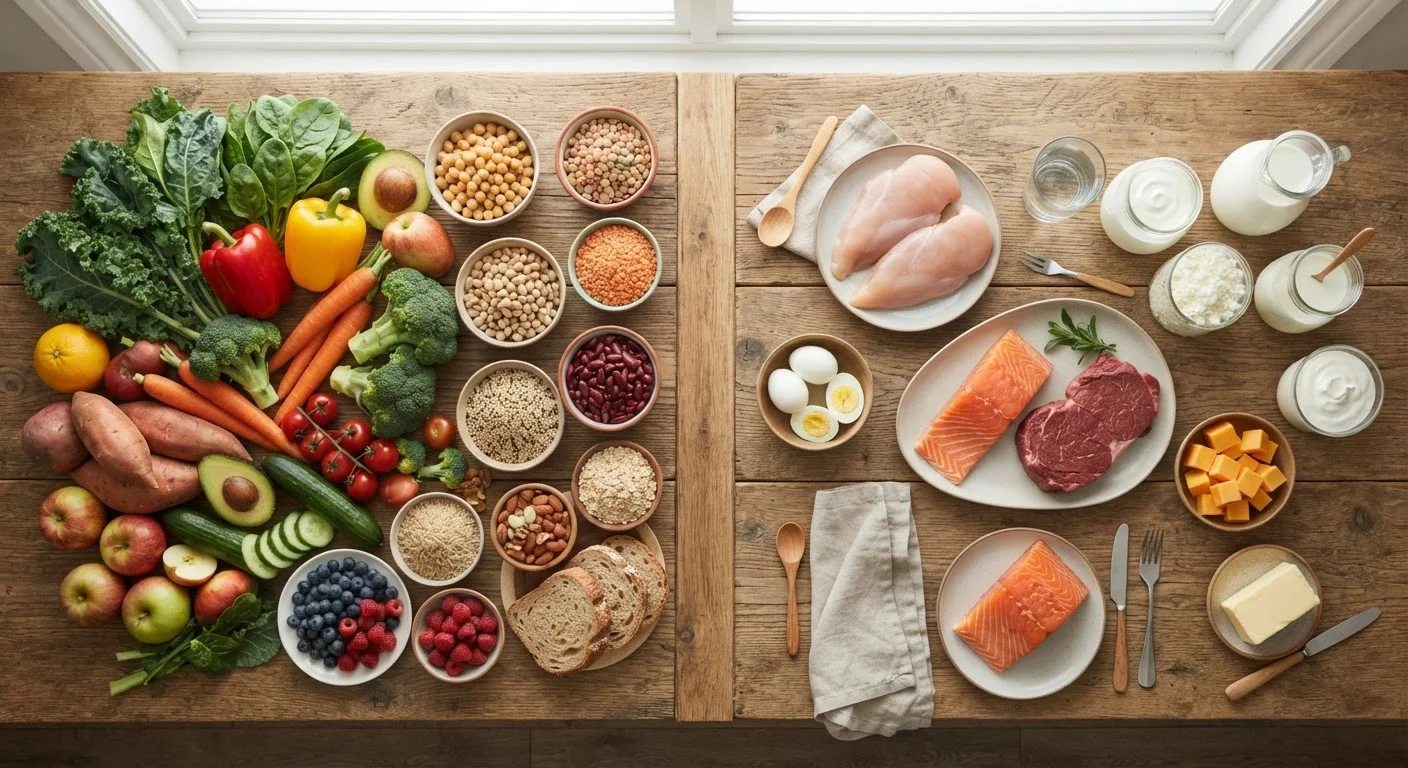
The phrase "plant-based" covers a wide spectrum - from fully vegan diets (no animal products at all) to lacto-ovo vegetarian patterns (dairy and eggs included) to flexitarian approaches (mostly plants, with occasional meat). An omnivorous diet, by contrast, includes both plant and animal foods, though it varies enormously by culture, income, and individual preference. Before comparing outcomes, it helps to understand that researchers typically study broad dietary patterns - not individual foods - because that more accurately reflects how people actually eat. For a grounded primer on how food nourishes the body, see Nutrition Fundamentals.
Critically, not all plant-based diets are inherently healthful. A diet of white bread, packaged snacks, and soda is technically plant-based. Similarly, an omnivorous diet anchored in vegetables, legumes, and lean proteins looks very different from one heavy in processed meats and refined grains. This distinction - quality within pattern - runs through most of the relevant research.
What Research Shows on Key Health Markers
Large observational studies, including data from the Adventist Health Studies and EPIC-Oxford cohort, have found that vegetarian and vegan dietary patterns are associated with modestly lower rates of heart disease, type 2 diabetes, certain cancers, and all-cause mortality compared with typical omnivorous diets in those populations. A 2019 review published in the Journal of the American Heart Association found plant-forward diets associated with significantly lower cardiovascular risk.
| Plant-Based Diet | Omnivorous Diet | |
|---|---|---|
| Cardiovascular risk (observational data) | Associated with lower risk | Varies widely by diet quality |
| Type 2 diabetes associations | Lower risk in major cohort studies | Higher risk linked to processed meat intake |
| Protein completeness | Requires combining plant sources | Complete proteins readily available |
| Vitamin B12 | Supplementation typically required | Naturally abundant in animal foods |
| Iron bioavailability | Non-heme iron, lower absorption | Heme iron, higher absorption |
| Long-chain omega-3s (EPA/DHA) | Algae supplements needed for vegans | Provided by fatty fish |
| Environmental footprint (general) | Lower greenhouse gas emissions | Higher, especially red meat-heavy |
| Dietary flexibility | More restrictive depending on type | Broadly flexible across cultures |
However, observational research has important limits: plant-based eaters often differ from omnivores in other lifestyle factors - exercise habits, smoking rates, alcohol use - making it difficult to isolate diet as the sole variable. Randomized controlled trials on whole dietary patterns are logistically challenging and typically short in duration. The upshot is that associations are meaningful, but causation is harder to establish than headlines often suggest. For more on how to read nutrition claims critically, see common nutrition myths.
Nutrient Considerations: Where Each Pattern Has Edges
Omnivorous diets generally deliver complete proteins across a wide range of foods, along with heme iron (which is absorbed more efficiently than non-heme iron from plants), vitamin B12, long-chain omega-3 fatty acids (EPA and DHA from fatty fish), zinc, and preformed vitamin A - all without requiring supplementation or careful food combining.
Plant-based eaters need deliberate planning around several nutrients. Vitamin B12 is found almost exclusively in animal products; deficiency is a documented risk for vegans who do not supplement. Iron and zinc from plant sources are less bioavailable due to phytates; eating vitamin C-rich foods alongside iron sources and soaking or fermenting legumes can improve absorption. Calcium can be met through fortified plant milks and leafy greens, though quantities matter. EPA and DHA can be obtained from algae-based supplements rather than fish. Nutrient needs shift across life stages, so these considerations become especially important during pregnancy, infancy, adolescence, and older adulthood.
Planning a Plant-Based Diet Wisely
If you follow or are transitioning to a plant-based diet, consider getting blood levels of vitamin B12, iron, and vitamin D checked periodically. A registered dietitian can help you identify gaps and determine whether supplementation makes sense for your specific situation. Fortified foods - such as plant milks with added calcium and B12 - can meaningfully close common nutrient gaps without relying on supplements alone.
On the omnivore side, risks arise from excess saturated fat and sodium from processed and red meats, which are linked in research to elevated cardiovascular risk. The type and processing level of animal products matter considerably - unprocessed red meat carries different associations than processed meats like hot dogs and deli cuts.
Putting It Into Practice
Most nutrition researchers and major dietary guidelines converge on a shared emphasis: prioritize vegetables, fruits, whole grains, and legumes; limit ultra-processed foods; and moderate added sugars and sodium - recommendations that apply whether or not animal products are present. For practical guidance on how to structure daily meals within any pattern, principles that hold across dietary patterns offer a useful framework.
If you're considering shifting toward a more plant-forward approach, a gradual increase in legumes, whole grains, and vegetables - rather than an abrupt elimination of all animal foods - tends to be more sustainable and nutritionally safer for most adults. Anyone with existing health conditions, those who are pregnant, or parents making dietary decisions for children should work with a registered dietitian before making significant changes. This article provides general nutrition education and is not a substitute for personalized medical or dietary advice; please consult a qualified healthcare professional for guidance specific to your situation.
For a practical next step, a weekly grocery audit can help identify patterns in what you're already buying - a low-effort starting point for anyone looking to eat more intentionally.
This article is for general informational and educational purposes only and does not constitute medical or dietary advice. Always consult a qualified healthcare provider or registered dietitian before making significant changes to your diet.
The content on this site is provided for informational purposes only and should not be considered a substitute for professional advice. While we strive to provide accurate and up-to-date information, we make no guarantees regarding its completeness or accuracy. Always consult a qualified professional for advice specific to your circumstances before making any decisions.