

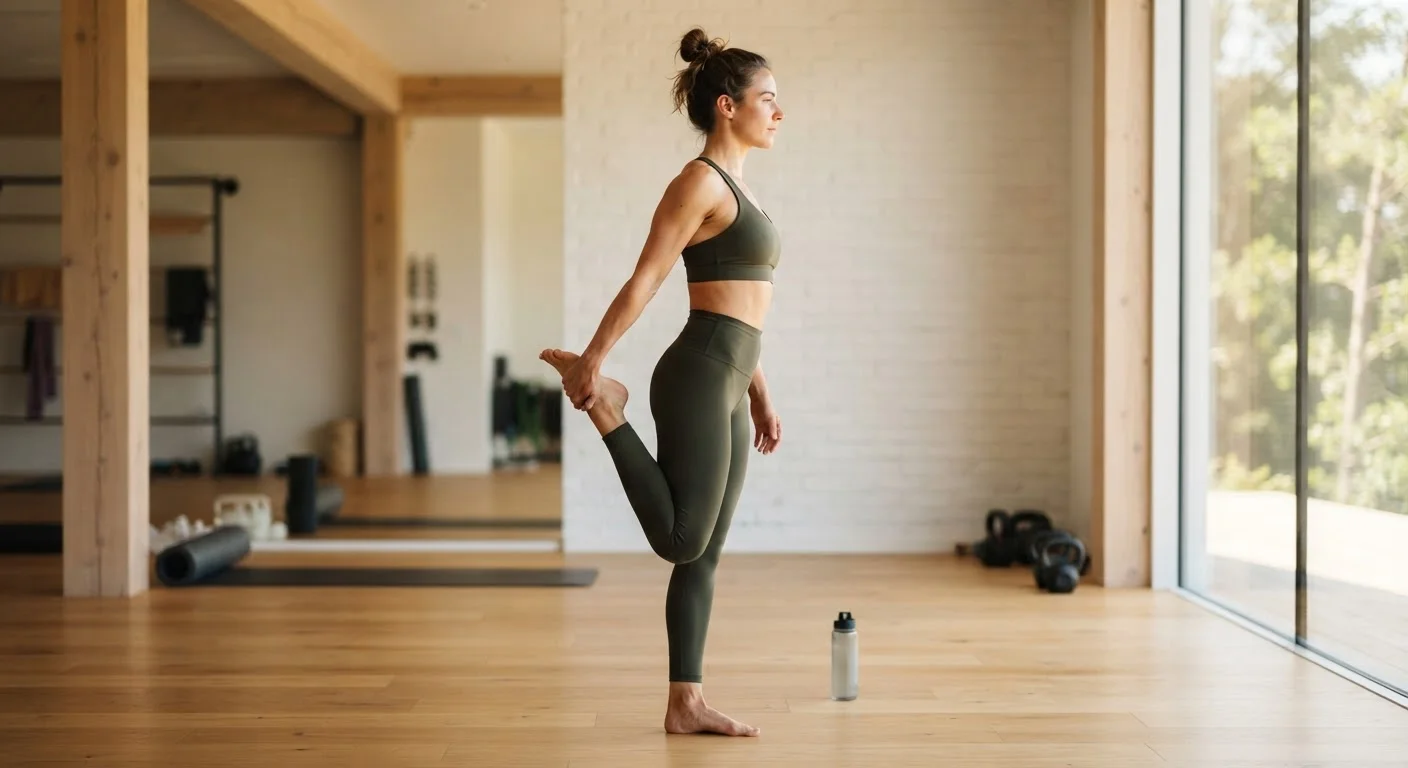
Option A
Pre-Exercise Stretching
The traditional warm-up move - but with important caveats.
Best for: Best for raising body awareness and preparing joints for movement, especially with dynamic techniques.
Option B
Post-Exercise Stretching
The evidence-backed window for improving long-term flexibility.
Best for: Best for improving range of motion and aiding recovery when muscles are warm and pliable.
Why Stretching Timing Became a Debate
For decades, static stretching - holding a position for 20 to 60 seconds - was the default recommendation before any workout. Then a wave of research in the early 2000s began challenging that assumption, finding that prolonged static holds before exercise could temporarily reduce muscular strength and explosive power. That finding reshaped how trainers and physiologists think about warm-ups, but it also created confusion for everyday exercisers.
The core issue is that "stretching" is not a single activity. It encompasses static stretching, dynamic stretching (controlled movement through a range of motion), ballistic stretching (bouncing movements), and proprioceptive neuromuscular facilitation (PNF), among others. Research findings that apply to one type do not automatically extend to all. Understanding which kind of stretching you're doing - and when - is the first step toward making an informed decision. Common exercise myths about stretching often ignore this critical distinction.
What Research Says About Pre-Exercise Stretching
The concern around pre-exercise stretching centers specifically on prolonged static holds. Multiple studies have observed that holding a stretch for longer than 60 seconds before activity is associated with measurable, short-term reductions in muscle strength, power, and sprint performance. The mechanism is thought to involve changes in muscle stiffness and neuromuscular signaling - neither of which is ideal before high-intensity effort.
However, context matters significantly. The effect appears smaller or negligible when static stretches are brief (under 30 seconds) and followed by active warm-up movements. For recreational exercisers engaging in moderate-intensity activities, the practical impact may be minimal.
Dynamic stretching - movements like leg swings, arm circles, and walking lunges - tells a different story. Research generally supports dynamic warm-up routines for increasing joint range of motion, elevating muscle temperature, and activating neuromuscular pathways without the performance trade-offs linked to static holds. Most sports medicine guidelines now favor a dynamic approach in pre-exercise preparation.
| Criterion | Pre-Exercise Stretching | Post-Exercise Stretching |
|---|---|---|
| Best stretch type | Dynamic (leg swings, arm circles) | Static (held 20-60 seconds) |
| Effect on flexibility | Modest, temporary range-of-motion boost | Greater long-term flexibility gains |
| Effect on muscle strength | Prolonged static holds may reduce power | No negative impact on performance |
| Muscle temperature | Muscles still relatively cool | Muscles warm and more pliable |
| DOMS prevention | Not strongly supported by evidence | Not strongly supported by evidence |
| Ideal duration | 5-10 minutes of movement prep | 5-10 minutes of static holds |
What Research Says About Post-Exercise Stretching
After a workout, muscles are warmer, blood flow is elevated, and tissue extensibility is greater. These conditions make static stretching more mechanically effective for lengthening muscle fibers and connective tissue. A substantial body of evidence supports post-exercise static stretching as the more productive window for building and maintaining flexibility over time.
One persistent myth is that stretching after exercise prevents delayed onset muscle soreness (DOMS) - the stiffness often felt 24 to 48 hours later. Current evidence does not support this claim strongly. A systematic review published in the Cochrane Database of Systematic Reviews concluded that stretching before or after exercise does not produce clinically meaningful reductions in DOMS in healthy adults. This doesn't make post-workout stretching useless - flexibility benefits are real - but it does correct an overstated expectation.
~60 sec
Static stretch duration linked to strength reduction
Research suggests static stretches held beyond 60 seconds before exercise are most associated with temporary reductions in muscle power output.
No significant effect
Stretching's impact on post-exercise soreness
A Cochrane Database systematic review found stretching before or after exercise does not produce clinically meaningful reductions in DOMS in healthy adults.
For those building a new fitness habit, incorporating a structured cool-down stretch supports body awareness and can serve as a useful signal that the session has ended. See our personal readiness checklist for guidance on structuring your early workouts effectively.
Building a Practical Stretching Approach
The research points toward a complementary rather than either-or relationship between pre- and post-exercise stretching. A sensible, evidence-informed approach might look like this: use 5 to 10 minutes of dynamic movement to prepare your body before activity, and follow your session with 5 to 10 minutes of static stretching targeting the muscles you worked most. This structure respects both performance preparation and flexibility development without requiring a dramatic overhaul of your routine.
Individual factors - age, fitness level, injury history, and the type of activity - should also shape your choices. Older adults, for example, may benefit from longer warm-up periods. Those managing specific joint or muscle conditions should consult a physical therapist or physician before establishing a stretching routine, as general guidelines may not apply to their situation.
Understanding how stretching fits alongside your broader workout structure can also sharpen your overall approach. Our comparison of cardio and strength training explores how different exercise types affect your body and where stretching fits in.
A Note on Special Populations
Stretching recommendations for older adults, pregnant individuals, children, or those managing chronic conditions or recent injuries may differ from general guidance. Tissue elasticity, joint stability, and recovery needs vary considerably across these groups. If you fall into any of these categories, it's especially important to seek personalized guidance from a licensed physical therapist, physician, or certified exercise professional before establishing a routine.
This article is for general informational purposes only and does not constitute medical advice. If you have any health conditions, injuries, or concerns about your fitness routine, please consult a qualified healthcare professional before making changes.
The content on this site is provided for informational purposes only and should not be considered a substitute for professional advice. While we strive to provide accurate and up-to-date information, we make no guarantees regarding its completeness or accuracy. Always consult a qualified professional for advice specific to your circumstances before making any decisions.