

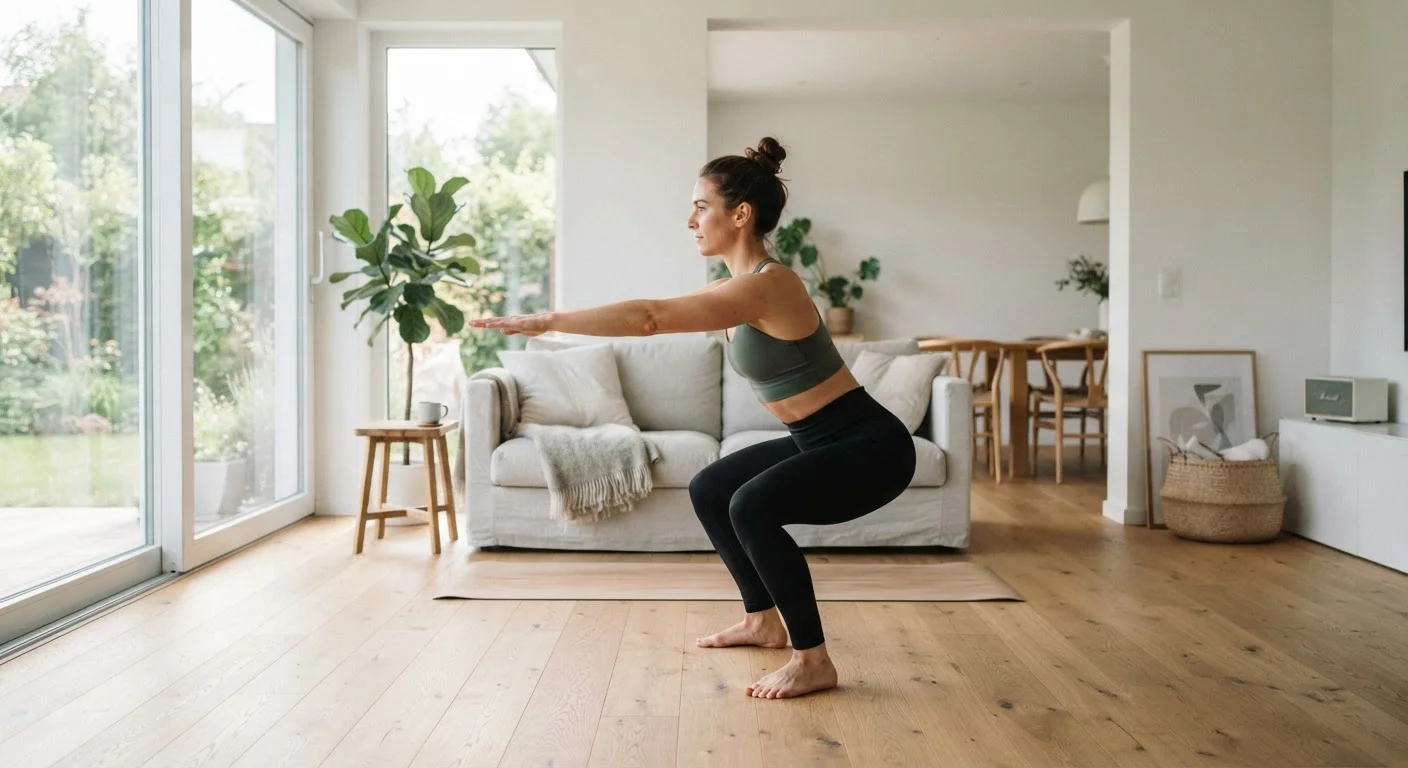
Why a Home Routine Works - and What Makes It Sustainable
The absence of equipment is rarely the barrier to fitness that people assume it is. Bodyweight training, when structured thoughtfully, can build functional strength, improve cardiovascular fitness, and support joint health - all without a single piece of purchased gear. The genuine barrier for most people is not access to equipment; it's a lack of structure and a mismatch between ambitious plans and available time.
Home routines remove several of the friction points that derail gym-based habits: commute time, cost, scheduling around facility hours, and the social discomfort some people feel in shared fitness spaces. What they require in return is a degree of self-direction and an understanding of how to build a session that actually works.
Consistency, not intensity, drives lasting results - a principle well supported by exercise science. A 20-minute session completed three times a week produces far more adaptation over six months than an exhausting workout done twice and then abandoned. The goal of this guide is to help you build something you'll actually keep doing.
Check In With a Professional First
This article provides general fitness education, not personalized medical advice. If you have a pre-existing health condition, joint issues, recent injury, or have been sedentary for an extended period, consult a qualified healthcare provider before beginning any new exercise routine. See our personal readiness checklist for a practical self-assessment to complete beforehand.
What You Need Before You Start
The physical requirements for a home movement routine are minimal. You need a clear floor space roughly the size of a yoga mat, comfortable clothing, and a way to track time. Everything else is optional.
What you will need
Beyond the physical setup, a brief honest assessment of your current starting point is worth doing before your first session. Note any joints that feel stiff or sore regularly, activities that currently cause discomfort, and how long it has been since you exercised consistently. This information helps you make smarter choices about which movement variations to begin with - and when to seek professional input.
Exercise mat or folded blanket
Provides cushioning for floor-based movements such as bridges, planks, and stretches.
Sturdy chair or low table
Useful for supported balance work, incline push-ups, or seated stretches.
Timer app or stopwatch
Keeps work and rest intervals consistent so you can track effort and progress over time.
How to Follow the Steps and Progress Over Time
The five steps below walk you through building your routine from the ground up - from scheduling to movement selection to tracking. Work through them in order the first time, then return to individual steps as your routine evolves.
Define your available time and choose a realistic schedule
Before selecting any exercises, decide how many days per week you can genuinely commit to moving - not how many you aspire to. Three to four days is a sustainable starting point for most people new to home routines. Write those days into your calendar as fixed blocks, even if the block is only 20 minutes.
Choosing a consistent time of day matters more than choosing the "ideal" time. Morning, lunch, and evening sessions each have trade-offs; the one that fits your actual schedule is the right one.
Structure each session into three phases
Every effective movement session, regardless of length, benefits from three distinct phases:
- Warm-up (5 minutes): Gentle mobility work to prepare joints and raise core temperature. Examples include hip circles, arm swings, neck rolls, and cat-cow stretches.
- Main work (10-20 minutes): The primary movement focus for that session - either strength-based or cardiovascular.
- Cool-down (5 minutes): Static stretching and slow breathing to lower heart rate and begin recovery.
This three-phase structure applies whether your session is 20 minutes or 45 minutes - you simply scale the main work block accordingly.
Select movements that cover the major patterns
A balanced routine addresses six fundamental movement patterns using bodyweight alone:
- Squat pattern: Bodyweight squat, wall sit, or split squat
- Hinge pattern: Glute bridge, single-leg deadlift (bodyweight), or good morning stretch
- Push pattern: Push-up variations (incline, standard, or knee-supported)
- Pull pattern: Doorframe rows or towel rows if a low bar isn't available
- Core stability: Plank, dead bug, or bird dog
- Cardiovascular movement: Marching in place, step touches, jumping jacks, or stair climbing
You don't need to cover all six in every session. Alternating emphasis - for example, lower-body and core one day, upper-body and cardio the next - keeps the routine varied and allows muscle groups to recover.
Set starting volume and build gradually
Begin conservatively. A reasonable starting point for most beginners is two to three sets of eight to twelve repetitions per strength exercise, or 20-30 second holds for isometric movements like planks. Rest 45-90 seconds between sets.
Increase difficulty only when the current level feels genuinely manageable - not just on one good day, but consistently across multiple sessions. Progression options that require no equipment include: increasing repetitions, slowing the tempo of each movement, reducing rest time, or advancing to a harder variation of the same pattern.
Track your sessions simply and review weekly
Keep a simple log - a notebook, a notes app, or even a tally on a whiteboard - recording what you did and how it felt. This doesn't need to be elaborate. Noting the date, movements, sets, and a brief energy rating (low, moderate, high) gives you enough data to spot patterns and make smart adjustments.
At the end of each week, spend two to three minutes reviewing. Did you hit your planned sessions? Were any movements uncomfortable (distinct from the normal effort of exercise)? Adjust the following week accordingly. This habit of reflection is what separates routines that last from those that fade.
Pair Movement With an Existing Habit
Attaching your movement routine to something you already do - making coffee, waking up, or finishing work - dramatically improves follow-through. Behavioral research consistently shows that habit stacking reduces the activation energy needed to start. Even a 10-minute routine done daily outperforms an ambitious session done once a week.
As you grow more comfortable with the movements and the structure feels natural, you may find yourself ready to explore more targeted training. Our article on strength training for beginners is a useful next step when bodyweight work alone feels insufficient.
This article is for general informational and educational purposes only and does not constitute medical advice. Always consult a qualified healthcare professional before starting a new exercise program, particularly if you have any health conditions or concerns.
The content on this site is provided for informational purposes only and should not be considered a substitute for professional advice. While we strive to provide accurate and up-to-date information, we make no guarantees regarding its completeness or accuracy. Always consult a qualified professional for advice specific to your circumstances before making any decisions.