

Our Verdict
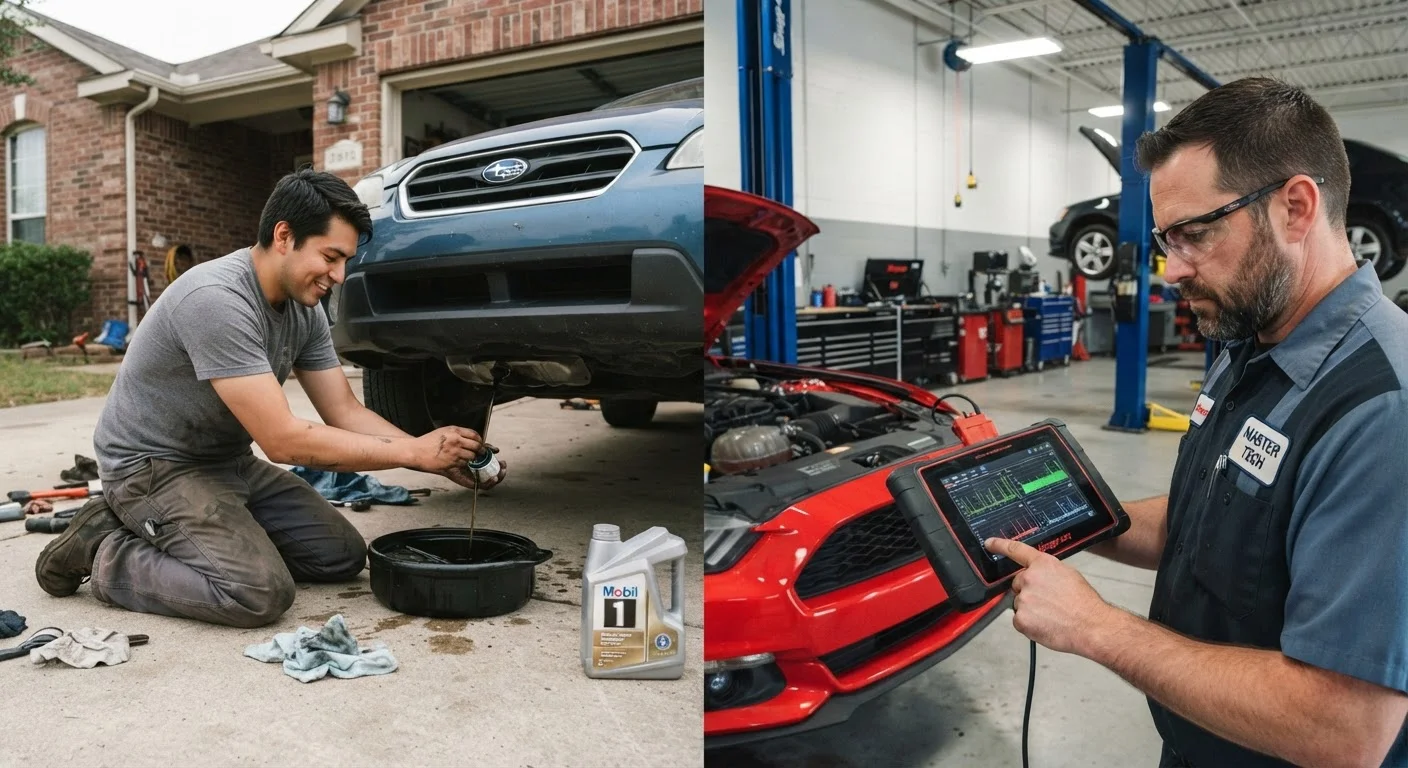
DIY maintenance makes sense for straightforward, low-risk tasks where the tools are accessible and the consequences of error are minor. Professional service is the right call for anything safety-critical, diagnostically complex, or requiring specialized equipment. Most drivers benefit from doing both - handling simple upkeep themselves while building a relationship with a trustworthy shop for the rest.
| Best for | Recommended |
|---|---|
| Drivers comfortable with basic tools and simple upkeep | DIY maintenance |
| Safety-critical systems like brakes, suspension, and airbags | Professional shop |
| Diagnosing warning lights or unknown symptoms | Professional shop |
| Routine consumables like wipers, bulbs, and cabin air filters | DIY maintenance |
The Real Question: Risk vs. Reward
Every car maintenance decision comes down to two factors: your ability to do the job correctly and the consequences if something goes wrong. A poorly installed cabin air filter is an inconvenience. An incorrectly bled brake system is a safety emergency. Understanding where tasks fall on that spectrum is what separates smart DIY from dangerous overconfidence.
Part of the confusion stems from outdated assumptions - both about how hard certain jobs are and about what shops actually charge. For a reality check on common automotive misconceptions, see car maintenance myths that may be costing you.
| DIY at Home | Professional Shop | |
|---|---|---|
| Cost | Parts cost only; labor is free | Parts plus labor charges |
| Safety risk if done wrong | Low on simple tasks; high on complex ones | Minimized by training and liability |
| Tools required | Basic hand tools for simple jobs | Specialized equipment available |
| Diagnostic accuracy | Limited without professional scanners | Full diagnostic capability |
| Warranty implications | Potential risk if not documented properly | Certified service preserves warranty |
| Best task examples | Filters, wipers, bulbs, tire pressure | Brakes, suspension, SRS, transmission |
Tasks Most Drivers Can Handle at Home
Several routine maintenance items require minimal tools, carry low risk if done imperfectly, and have straightforward instructions in your owner's manual or vehicle-specific guides:
- Engine air filter replacement: Usually a clip or screw-off housing, no special tools needed.
- Cabin air filter replacement: Typically behind the glove box - often a five-minute job.
- Wiper blade replacement: Straightforward, with most blades sold with instructions attached.
- Exterior bulb replacement: Headlights on some modern vehicles are exceptions - check your manual first.
- Tire pressure checks and inflation: A quality gauge and access to an air source is all that's needed.
- Windshield washer fluid top-off: No mechanical skill required.
Oil changes fall into a gray zone. The task itself isn't complicated, but it requires safe vehicle lifting, proper disposal of used oil, and torquing the drain plug correctly. Errors can cause engine damage. Many drivers find the cost difference between DIY and a quick-lube shop is smaller than expected once supplies are factored in.
Start With Your Owner's Manual
Before attempting any maintenance task, check your vehicle's owner's manual for the manufacturer's recommended procedure and specifications. Many modern vehicles have torque specs, fluid types, and service intervals that differ from generic guidelines you'll find online. The manual is also the first place to check whether a task requires dealer-only tools or software.
When the Shop Is the Right Call
Some systems in a modern vehicle are too interconnected, too safety-critical, or too dependent on specialized equipment for DIY to be a reasonable option for most drivers:
- Brake system service: Pad replacement is manageable for experienced home mechanics, but rotor resurfacing, caliper rebuilds, or brake line work requires proper tools and expertise. Errors directly affect stopping ability.
- Suspension and steering components: Alignment requires dedicated machinery. Incorrect installation of control arms, tie rods, or ball joints can cause handling failure.
- Airbag system (SRS) components: Working near airbag components without proper training carries a risk of accidental deployment - a life-threatening hazard.
- Transmission service beyond fluid changes: Internal transmission repair is a specialty trade.
- Check engine light diagnosis: A consumer OBD-II scanner reads codes but not causes. A misfire code, for instance, could stem from plugs, coils, injectors, or compression issues - a professional diagnostic step is almost always worthwhile.
For a full schedule of what maintenance tasks are typically due and when, this routine maintenance reference provides a practical breakdown.
Don't Ignore Warning Lights to Avoid Shop Costs
Deferring a professional diagnosis because of cost concerns is a common mistake that often leads to larger repair bills. A minor sensor fault can mask a developing mechanical problem. If a warning light appears and doesn't clear after a verified simple fix, have the vehicle inspected - driving on an undiagnosed fault can compound damage and, in some cases, create safety hazards.
How to Make the Decision for Any Specific Job
Before tackling any repair or maintenance task, work through these questions honestly:
- Do I have the right tools? Not just wrenches, but torque wrenches, specialty sockets, or diagnostic equipment if needed.
- What's the worst-case outcome of an error? Minor inconvenience or compromised vehicle safety?
- Is this covered under warranty? Some manufacturer or extended warranties require service at certified facilities - verify before DIYing.
- Can I find reliable, vehicle-specific instructions? Generic guides are a starting point; model-specific shop manuals or reputable forums are better.
Building the habit of consistent, well-documented maintenance - whether DIY or professional - is one of the most effective long-term strategies for vehicle reliability. Keeping a car dependable over the long haul involves both good decisions at the task level and a consistent recordkeeping habit that carries across ownership. For a broader overview of vehicle ownership fundamentals, the Car Ownership Basics hub covers everything from insurance to routine upkeep.
The content on this site is provided for informational purposes only and should not be considered a substitute for professional advice. While we strive to provide accurate and up-to-date information, we make no guarantees regarding its completeness or accuracy. Always consult a qualified professional for advice specific to your circumstances before making any decisions.