

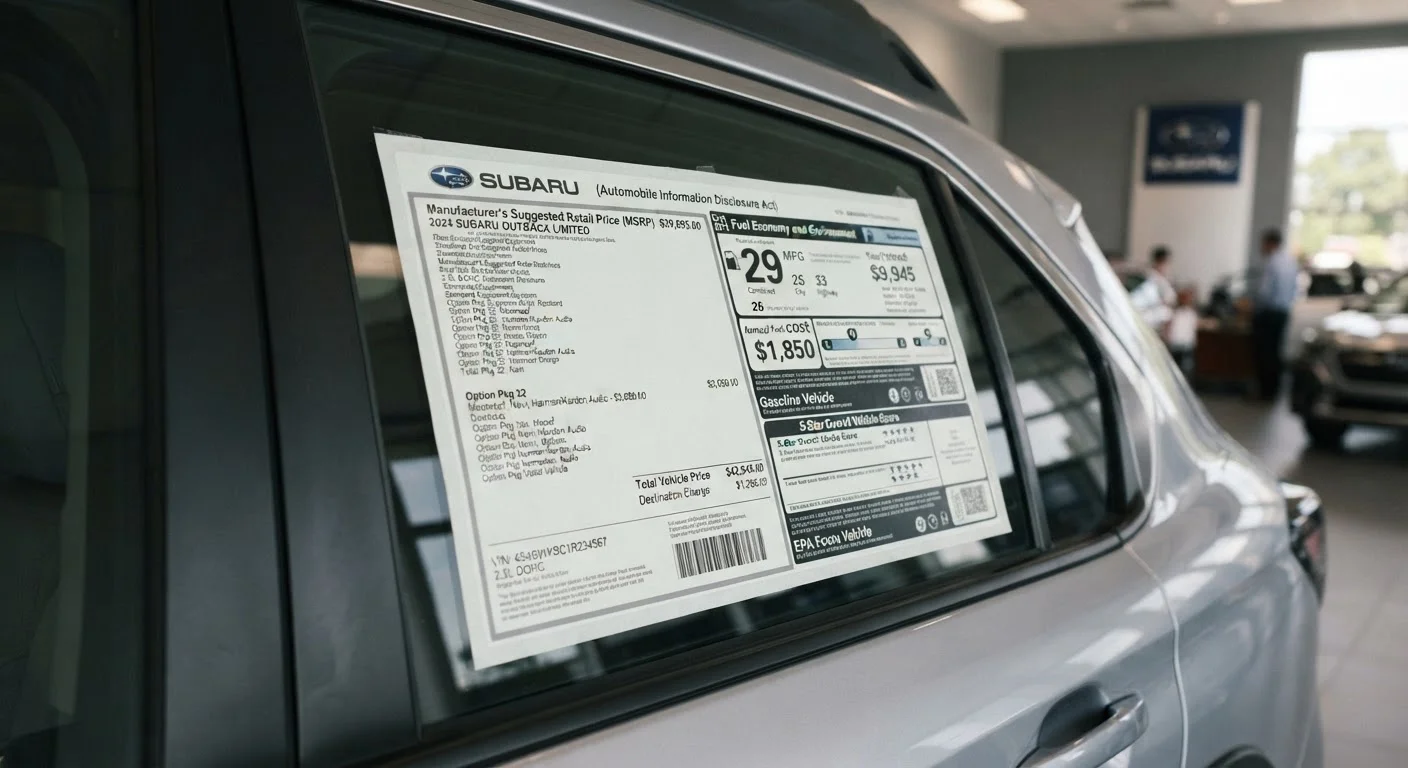
What the Monroney Sticker Actually Is
The label affixed to the window of every new vehicle sold in the United States is officially called the Monroney sticker, named after the senator who sponsored the Automobile Information Disclosure Act of 1958. Federal law requires dealers to display it and prohibits its removal before the buyer takes possession. Its purpose is straightforward: give consumers a standardized, manufacturer-issued snapshot of what they're buying and what it costs.
Understanding each section of this document puts you in a stronger negotiating position and prevents surprises at the finance desk. If you're approaching your first purchase, see our guide to what first-time buyers often overlook for broader context on the buying process.
| Legal name | Monroney sticker (Automobile Information Disclosure Act, 1958) |
| Required by federal law | Yes - removal before sale is prohibited |
| Fuel economy figures | EPA-estimated; real-world results vary (U.S. Environmental Protection Agency) |
| Destination charge | Non-negotiable; set by manufacturer |
| MSRP vs. sale price | MSRP is a suggestion, not a fixed price |
| Safety ratings source | NHTSA and/or IIHS - verify independently (NHTSA, IIHS) |
Breaking Down Every Section
Vehicle Identification and Base Price
The top of the sticker lists the make, model, model year, trim level, and a unique VIN. Below that is the Manufacturer's Suggested Retail Price (MSRP) for the base vehicle - the price before any options are added. MSRP is the manufacturer's recommendation; dealers are not legally obligated to sell at that figure.
Installed Options and Packages
This section itemizes every factory-installed feature added beyond the base configuration - things like a panoramic sunroof, advanced safety package, or premium audio system. Each option carries its own line-item price. Scrutinize this section carefully: occasionally items are listed that you neither requested nor particularly want, and their prices are negotiable elements of the overall deal.
Destination and Delivery Charge
This is a non-negotiable, fixed fee that covers the cost of transporting the vehicle from the factory to the dealership. It varies by manufacturer and destination, but every buyer pays it - it cannot be waived. Do not confuse this with dealer-added documentation or processing fees, which are separate and, in many states, negotiable.
Total MSRP
The sum of base price, installed options, and destination charge. This is the manufacturer's total suggested price - not the out-the-door price you'll pay after taxes, registration, and dealer fees are applied.
Monroney Sticker
The federally mandated price and specification label affixed to every new vehicle's window. Required by the Automobile Information Disclosure Act of 1958, it must remain on the vehicle until the buyer takes possession.
MSRP
Manufacturer's Suggested Retail Price. The price the automaker recommends for the vehicle, not a fixed selling price. Dealers may sell above or below this figure.
Destination Charge
A fixed, non-negotiable fee covering the cost of transporting the vehicle from the assembly plant to the dealership. It is set by the manufacturer and applies equally to all buyers.
EPA Fuel Economy Estimate
Standardized city, highway, and combined miles-per-gallon figures derived from laboratory testing by the U.S. Environmental Protection Agency. Real-world mileage typically differs based on driving conditions and habits.
Trim Level
A specific configuration tier within a model line (e.g., base, mid, or top trim). Each trim includes a defined set of standard features, with higher trims generally adding more equipment at a higher price.
VIN
Vehicle Identification Number. A unique 17-character alphanumeric code assigned to every vehicle at manufacture. It encodes the country of origin, manufacturer, vehicle type, and production sequence.
Fuel Economy and Environment Label
Mandated by the EPA, this section reports estimated city, highway, and combined mpg (or MPGe for electrics). It also shows an estimated annual fuel cost and a comparison to the average new vehicle. These are estimates based on standardized laboratory tests - real-world results vary with driving habits, load, terrain, and climate. The label also includes a smog and greenhouse gas score on a 1-10 scale.
Safety Ratings
Some stickers include NHTSA or IIHS star ratings where available. Not all new vehicles carry these at point of sale - check the NHTSA and IIHS websites directly for the most current crash-test results before making a decision.
Standard Equipment List
Often printed in smaller type, this section inventories everything included in the base trim: engine specs, transmission type, standard safety features, seating material, and infotainment basics. It's the foundation against which you can compare option upgrades.
Understanding the sticker is only one layer of the true cost picture. For a fuller view, total cost of ownership - including maintenance and depreciation deserves equal attention before you sign.
The content on this site is provided for informational purposes only and should not be considered a substitute for professional advice. While we strive to provide accurate and up-to-date information, we make no guarantees regarding its completeness or accuracy. Always consult a qualified professional for advice specific to your circumstances before making any decisions.